The 12-hour fast: when a cold-turkey switch is the kindest way
For most healthy adult dogs, a short fast and a clean start beats weeks of half-and-half. Here's who it's for and who it isn't.
By the owners, Animal House of Distinction · Jupiter, FL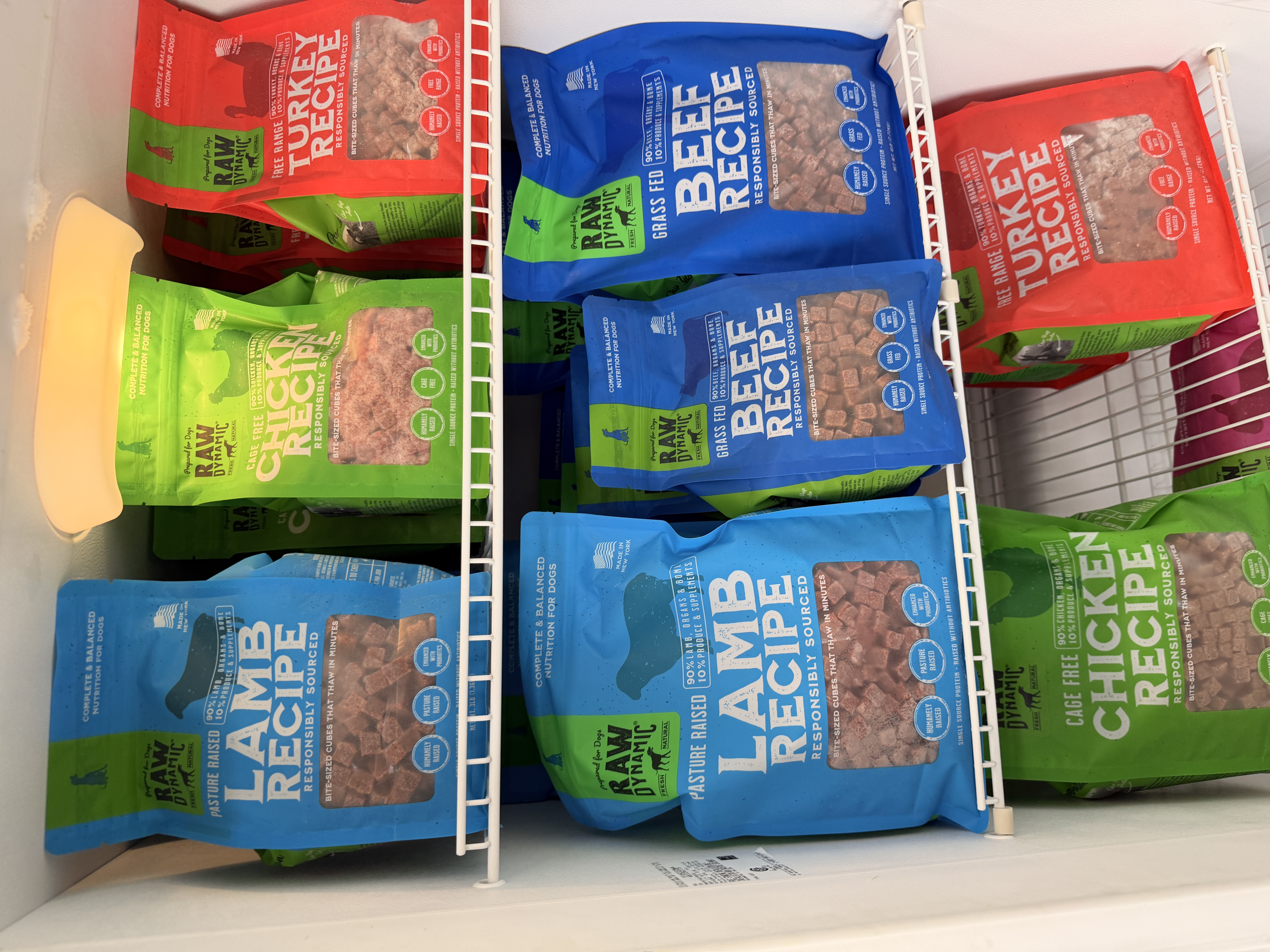
Why mixing often backfires
The most common transition advice is to blend a little raw into kibble and shift the ratio over two or three weeks. It sounds gentle. In practice it is where most upset stomachs come from.
Kibble is starch-heavy and digests slowly; raw meat digests fast and needs a more acidic stomach. Put the two in one bowl and the raw sits in a diluted, higher-pH stomach for hours longer than it should. That is when you see the loose stool people blame on "the raw."
The clean-break method
For a healthy adult dog — no chronic digestive disease, not underweight, not a young puppy — we recommend a short fast. Feed the last kibble meal in the morning and nothing else that day except water. The 12-hour gap lets the stomach empty and its acidity rebalance.
The next morning, feed a single, complete raw food in one protein. Chicken or turkey is our default: lean, gentle and inexpensive. Portion at 2% of body weight for the day, split into two meals. A 50 lb dog gets 16 oz a day, 8 oz per meal. Use a kitchen scale, not a scoop.
Hold that one protein for a full week. No treats, no chews, no table scraps. You are trying to read what the food is doing, and every extra variable makes that harder.
What the first week looks like
Stool gets small, firm and pale almost immediately — that is bone being used, not a problem. You may see a day or two of soft stool or a little mucus as the gut bacteria shift. A tablespoon of plain pumpkin handles it.
Some dogs drink noticeably less. Raw food is around 70% moisture, so they are getting water from the bowl. Keep fresh water out regardless.
Energy often dips slightly for two or three days and then climbs. By day seven most owners notice cleaner breath and a shinier coat starting to come in.
Who should not do this
Puppies under six months: they cannot skip meals safely and need three feedings a day. Start them on raw directly, no fast, at the puppy percentage.
Seniors, underweight dogs, and any dog with pancreatitis, IBD or a history of chronic GI trouble: go gradual, separate meals (kibble a.m., raw p.m.) and talk to us first.
Cats: never. A cat that stops eating can develop hepatic lipidosis within days. The cat transition is a completely different process — see our cat article.